Announcing our $35m fundraise! Read all about it here

Observability pipeline that filters, routes, and governs telemetry before storage.

You are in a cost review meeting and someone points out that your observability bill now exceeds your compute spend. The pipeline is treated as plumbing, so data gets pushed downstream with no filtering, no enrichment, and no governance. Every problem gets discovered too late to fix cheaply. Tsuga treats the pipeline as a first-class feature. You filter, transform, and route telemetry before it hits storage, and you make that decision before the meter starts running.

Hero image

Production observability pipelines that scale economically

Telemetry volume grows by roughly thirty percent every year, while IT budgets barely move. Sooner or later, every team runs into the same problem. Either spend more, keep less data, or end up building and maintaining a pipeline team no one planned for.

The pattern is predictable. Engineers start sampling logs aggressively, retention windows shrink from two weeks to three days, and regions or log streams get dropped to stay under budget.

What should be a reliability layer slowly turns into a budget control mechanism.

Once telemetry is indexed, the cost is already locked in. Teams discover too late that eighty percent of their volume is noise. They have already paid to ingest, parse, and store it.

How Tsuga helps

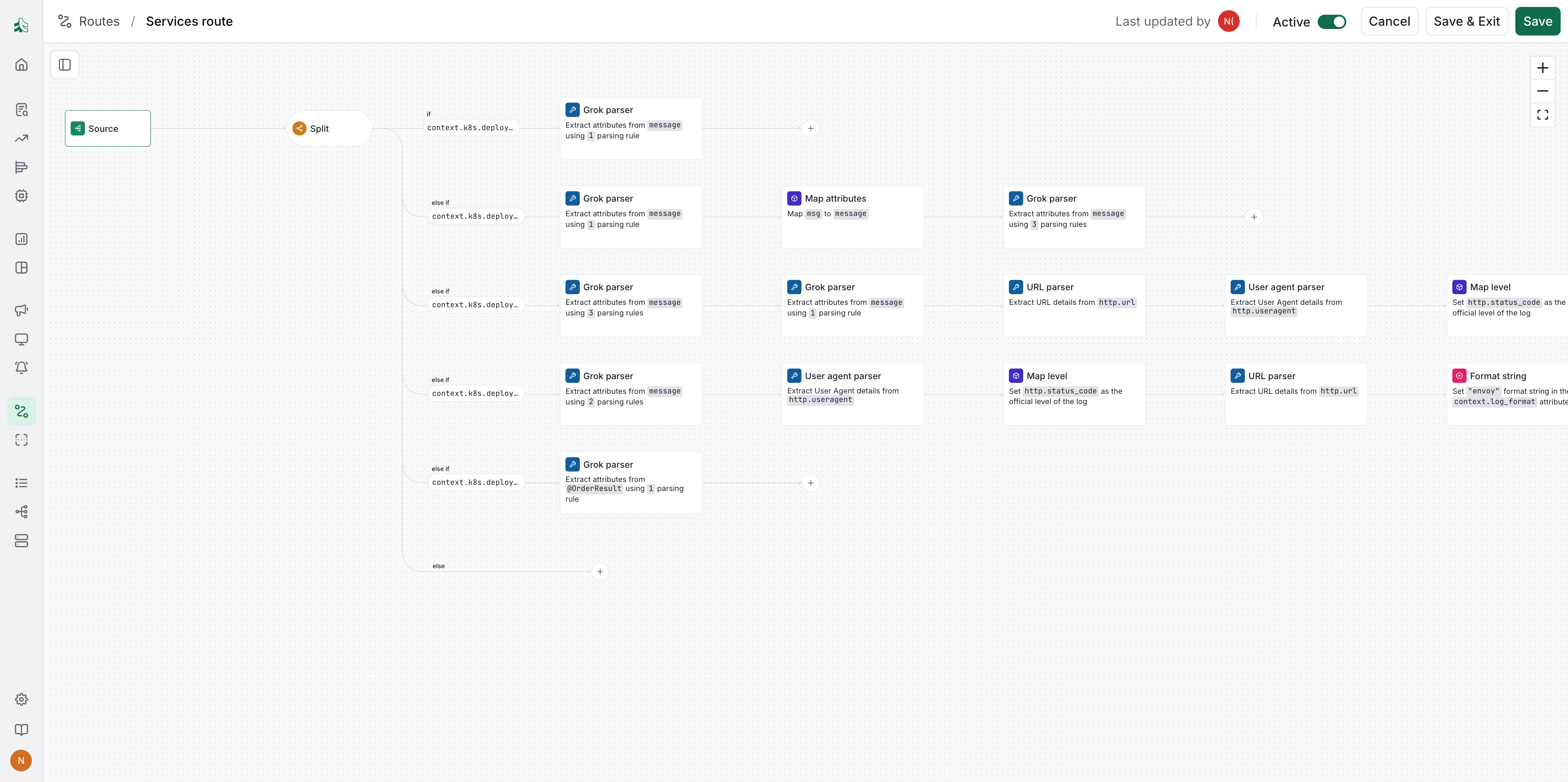
Tsuga's pipeline lets you filter, transform, and route telemetry before it reaches storage. You decide what's worth keeping - and you make that decision before the meter starts running.

Production observability pipelines that scale economically

Your pipeline, your cloud, your bill

Tsuga deploys an enterprise observability pipeline inside your AWS account. You filter, enrich, route, and govern telemetry before it hits storage. You pay for your own S3 and compute with no vendor markup. Your data stays under your KMS keys. Your routing logic stays portable.

Why Tsuga is different

Most pipeline tools are either cloud SaaS add-ons that still move your data through someone else's infrastructure or open-source components that leave your team managing three full-time jobs of tuning and maintenance. Tsuga is neither.

No infrastructure tax on storage or compute

Tsuga runs inside your cloud. Storage hits your S3 bill directly. Compute runs on your EC2. There is no twenty to thirty percent markup for a vendor reselling AWS services back to you. When you optimise your data volume, you see the savings on your own AWS bill.

Your cloud, your data, your keys

Your telemetry never leaves your VPC. It is encrypted with your KMS keys. It sits in your object storage. Tsuga manages the software lifecycle remotely through a control plane that connects via mutual TLS, but the data layer is entirely yours.

A forward-deployed engineer who works to lower your bill

Tsuga assigns a named field engineer to every account. Their job is to help you reduce infrastructure cost, because Tsuga does not profit from data bloat. You get direct access to the CTO and twenty-four-hour responsiveness on feature requests. The incentive model is aligned. The more efficiently you run, the better the relationship works

How it works/capabilities

Route flexibly to any destination

Dual-ship to multiple backends, phase migrations gradually, and change your routing strategy without re-architecting everything downstream. The pipeline adapts to your timeline, not the other way around.

Enrich and normalise as data flows

Add context, standardise field names, and enforce schemas before data hits storage. Downstream tools get consistent, clean telemetry every time. Cross-service correlation becomes automatic instead of manual.

Reduce cost before indexing

Make deliberate decisions about what to keep and what to drop at the point of ingestion. Intentional optimisation replaces blind reduction. You stop paying for noise.

Catch sensitive data early

Scan for PII and credentials at the pipeline layer before they propagate to tools and teams that should not see them. Governance happens at the boundary, not as a cleanup job

Built on open standards

OpenTelemetry native. The pipeline is an asset you own, with a routing strategy you control, not a vendor dependency you're stuck with.

Governance without friction

Platform teams set the standards. Product teams work freely within them. Cost attribution and ownership are native, not bolted on

Is Tsuga right for you?

Tsuga is purpose-built for a specific set of constraints. If your situation does not match them, we will tell you upfront.

Tsuga is a fit if you...

  • Spend $100K or more per year on observability and your bill is growing faster than your infrastructure
  • Need data sovereignty for regulatory, geographic, or AI governance reasons
  • Manage telemetry at scale across multiple services, teams, or cloud regions
  • Are migrating off a legacy platform and need a gradual, dual-ship transition path
  • Want a named engineer assigned to your account who works to lower your infrastructure cost

Tsuga is not a fit if you...

  • Are a small team with minimal observability spend and no compliance requirements
  • Have no compliance or data residency requirements and no plans to add them
  • Prefer a fully self-serve product with no engineering engagement or onboarding support

The pipeline as a first-class feature.

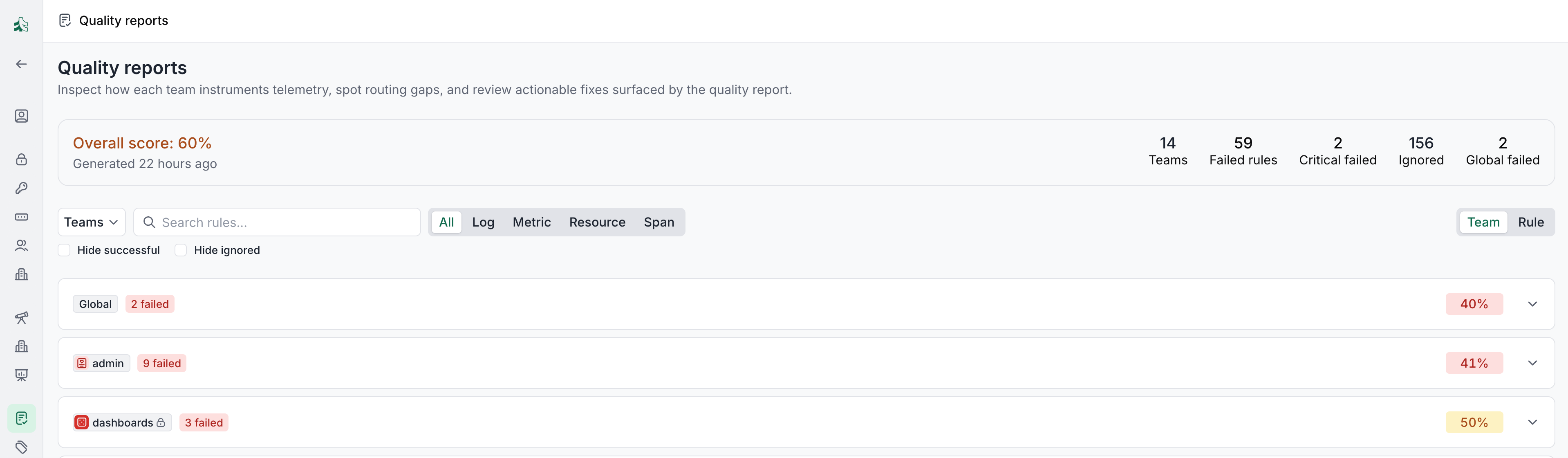
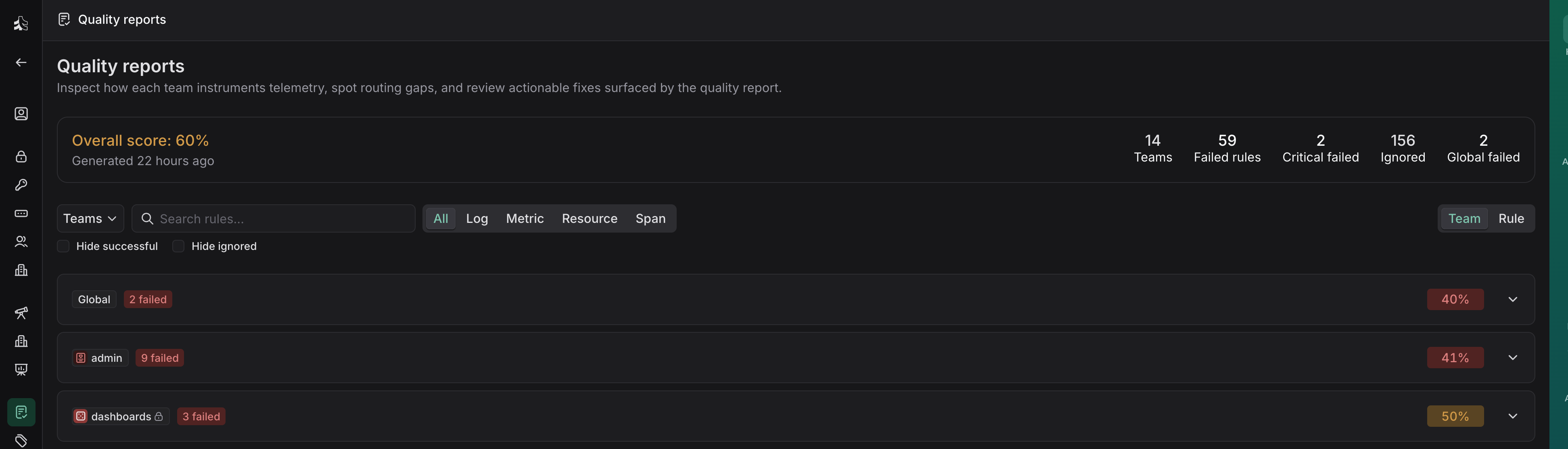
Tsuga treats the pipeline with the same care as dashboards, alerts, and search because quality observability starts at ingestion.

Route flexibly to any destination

Dual-ship to multiple backends, phase migrations gradually, and change your routing strategy without rearchitecting everything downstream.

Enrich and normalise as data flows

Add context, standardise field names, and enforce schemas before data hits storage. Downstream tools get consistent, clean telemetry every time.

Reduce cost before indexing

Make deliberate decisions about what to keep and what to drop, before the meter starts running. Intentional optimisation, not blind reduction.

Catch sensitive data early

Scan for PII and credentials at the pipeline layer, before they propagate to tools and teams that shouldn't see them.

Built on open standards

OpenTelemetry native. The pipeline is an asset you own, with a routing strategy you control, not a vendor dependency you're stuck with.

Governance without friction

Platform teams set the standards. Product teams work freely within them. Cost attribution and ownership are native, not bolted on.

Frequently asked questions

Cost reduction happens upstream. You filter and route before indexing, so you only store telemetry that has value. You keep full fidelity on what matters instead of sampling everything uniformly and hoping you kept the right lines.

Own your observability.

If your observability bill is growing faster than your infrastructure, or if telemetry leaving your cloud is a risk you cannot take, Tsuga is built for your constraints.